

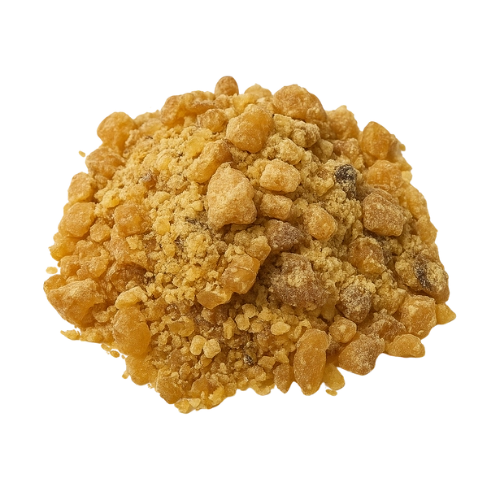
5-MeO-DMT Crystals (Freebase)
Price range: $99.99 through $420.00
| Formula | C12H16N2 |
|---|---|
| Molar mass | 188.274 g·mol−1 |
| 3D model (JSmol) | |
| Density | 1.099 g/cm3 |
| Melting point | 40 °C (104 °F) |
| Boiling point | 160 °C (320 °F) at 0.6 Torr (80 Pa)[7] |
The Mystique of 5-MeO-DMT Crystals (Freebase)
5-MeO-DMT (5-methoxy-N,N-dimethyltryptamine) is a powerful, naturally occurring psychedelic compound renowned for its profound visionary effects. When in crystal form, particularly as freebase, it becomes a potent substance that has captivated explorers of consciousness and researchers alike. This guide delves into the nature, history, effects, and safety considerations surrounding 5-MeO-DMT crystals.
What Are 5-MeO-DMT Crystals (Freebase)?
- Chemical Nature:
5-MeO-DMT in its freebase form appears as crystalline, often white or colorless, solid chunks. The freebase form is the pure, non-salt version of the compound, which is typically more volatile and easier to vaporize or insufflate. - Source and Extraction:
Naturally found in certain plants and the venom of the Colorado River toad (Incilius alvarius), 5-MeO-DMT can also be synthesized in laboratories. Extracting and crystallizing it involves complex chemical processes, often used by experienced chemists.
Historical and Cultural Context:
- Indigenous cultures in South America have used plants containing 5-MeO-DMT for centuries in shamanic rituals.
- The toad venom has been revered in some traditions for its spiritual and healing properties.
- In modern times, it has gained popularity among psychonauts seeking intense spiritual experiences.
Effects and Experiences:
- Onset: Usually rapid, within minutes when vaporized.
- Duration: Typically 15–30 minutes, with a peak that can be described as an overwhelming dissolution of ego.
- Subjective Effects:
Users report feelings of unity, transcendence, and encounters with divine or otherworldly entities. The experience often involves a sense of merging with the universe, loss of self-identity, and profound insights.
Methods of Use:
- Vaporization:
Crystals are heated in a vaporizer, allowing for rapid absorption through the lungs. - Insufflation:
Crystals can be ground into powder and insufflated (snorted), though this method is less common due to the potency and short duration. - Oral ingestion:
Usually requires a MAOI to be effective orally, which is less common with pure crystals.
Safety and Risks:
- The potency of 5-MeO-DMT requires careful dosing; small amounts can produce overwhelming effects.
- Not suitable for individuals with heart conditions, mental health issues, or those taking certain medications.
- The intense nature of the experience can lead to psychological distress if not prepared or supported properly.
- Legal status varies greatly by jurisdiction; in many places, it is illegal or controlled.
Legal Status:
- In some countries, 5-MeO-DMT is classified as a Schedule I substance or equivalent.
- Possession, sale, or distribution can carry legal penalties. 5-MeO-DMT Crystals (Freebase)
Conclusion:
5-MeO-DMT crystals as freebase form are a potent gateway to extraordinary states of consciousness. While their allure is undeniable, responsible use, thorough understanding, and respect for their power are essential. As with any powerful psychedelic, safety and legality should always be prioritized. 5-MeO-DMT Crystals (Freebase)
Dimethyltryptamine (DMT), also known as N,N-dimethyltryptamine (N,N-DMT) and DiMiTri is a serotonergic hallucinogen and investigational drug of the tryptamine family that occurs naturally in many plants and animals.[1][2][3][9] DMT is used as a psychedelic drug and prepared by various cultures for ritual purposes as an entheogen.[10]
DMT has a rapid onset, intense effects, and a relatively short duration of action. For those reasons, DMT was known as the “businessman’s trip” during the 1960s in the United States, as a user could access the full depth of a psychedelic experience in considerably less time than with other substances such as LSD or psilocybin mushrooms.[11] DMT can be inhaled or injected and its effects depend on the dose, as well as the mode of administration. When inhaled or injected, the effects last about five to fifteen minutes. 5-MeO-DMT Crystals (Freebase)
Effects can last three hours or more when orally ingested along with a monoamine oxidase inhibitor (MAOI), such as the ayahuasca brew of many native Amazonian tribes.[12] DMT induces intense, often indescribable subjective experiences involving vivid visual hallucinations, altered sensory perception, ego dissolution, and encounters with seemingly autonomous entities. DMT is generally considered non-addictive with low dependence and no tolerance buildup, but it may cause acute psychological distress or cardiovascular effects, especially in predisposed individuals.
DMT was first synthesized in 1931. It is a functional analog and structural analog of other psychedelic tryptamines such as O-acetylpsilocin (4-AcO-DMT),[13] psilocybin (4-PO-DMT), psilocin (4-HO-DMT), NB-DMT, O-methylbufotenin (5-MeO-DMT), and bufotenin (5-HO-DMT). Parts of the structure of DMT occur within some important biomolecules like serotonin and melatonin, making them structural analogs of DMT.
DMT exhibits broad and variable binding affinities across numerous receptors, showing its strongest interactions with serotonin receptors, especially 5-HT2A, 5-HT1A, and 5-HT2C, which are believed to mediate its psychedelic effects. Endogenous
DMT, a psychedelic compound, is naturally produced in mammals, with evidence showing its synthesis and presence in brain and body tissues, though its exact roles and origins remain debated. 5-MeO-DMT Crystals (Freebase) is internationally illegal without authorization, with most countries banning its possession and trade, though some allow religious use of ayahuasca, a DMT-containing decoction. Short-acting psychedelics like DMT are considered scalable alternatives to longer-acting drugs like psilocybin for potential clinical use.[14][15] DMT is currently undergoing clinical trials for treatment-resistant depression.[16]
| Quantity | 2 grams, 5 grams, 10 grams |
|---|
Be the first to review “5-MeO-DMT Crystals (Freebase)”
Related products




Reviews
There are no reviews yet.